Used P LASER LST-C-1 #293822144 for sale
URL successfully copied!
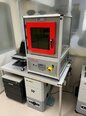
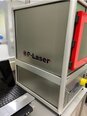
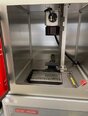
Tap to zoom
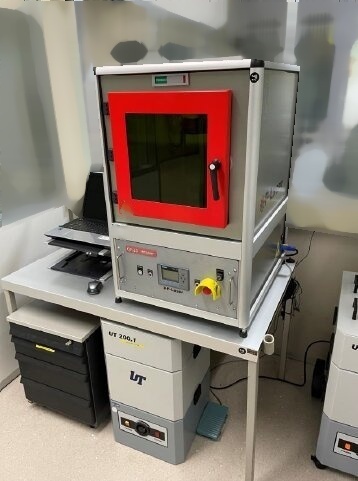

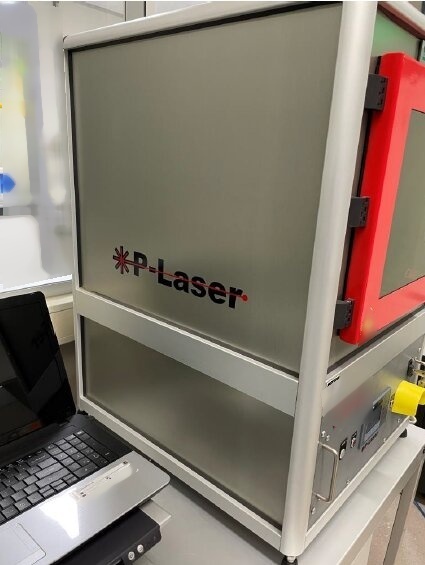
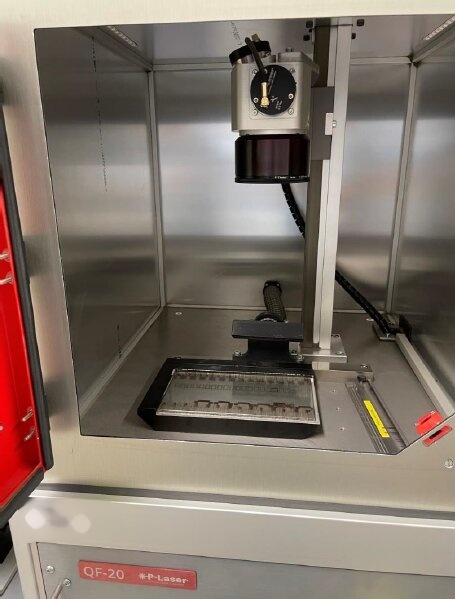
I'm sorry, but I couldn't find any specific information on a laser model named "P LASER LST-C-1." It is possible that it is a proprietary or an obscure model that is not widely documented. However, I can provide a general overview of the technical aspects of a typical laser equipment to give you a better understanding of lasers in general. Lasers, short for Light Amplification by Stimulated Emission of Radiation, are devices that emit intense, coherent, and monochromatic light through the process of stimulated emission. They find a wide range of applications in various fields such as medicine, communications, manufacturing, and research. In a typical laser system, there are several key components that work together to generate the laser beam. The heart of the unit is the gain medium, which is a material that amplifies the light through stimulated emission. This can be a solid, liquid, or gas material, depending on the type of laser. The gain medium is usually placed between two mirrors that form an optical cavity. One of these mirrors, called the output coupler, is partially transmitting to allow a portion of the laser light to exit the cavity and form the laser beam. The other mirror is highly reflective to keep the light bouncing back and forth through the gain medium, amplifying it in the process. To provide the energy needed for the laser to operate, a pump source is used to excite the atoms or molecules in the gain medium. This can be a flash lamp, a diode laser, or another laser depending on the specific requirements of the laser machine. The pump source raises the atoms to an excited state, which then release energy in the form of photons, resulting in stimulated emission and the generation of laser light. The output characteristics of the laser, such as the wavelength, pulse duration, and power, are determined by the properties of the gain medium, the cavity design, and the pump source. Different types of lasers, such as solid-state, gas, semiconductor, or fiber lasers, have their unique advantages and applications based on these factors. Control electronics are used to regulate the operation of the laser tool, controlling parameters like the output power, pulse repetition rate, and beam quality. Safety features are also essential to protect operators and ensure the proper functioning of the laser asset. In summary, lasers are versatile tools with a wide range of applications due to their ability to generate intense and focused beams of light. The design and operation of a laser model depend on various factors, including the type of gain medium, the pumping mechanism, and the desired output characteristics. Advanced technologies and research continue to push the boundaries of laser capabilities, leading to new applications and innovations in laser technology.
There are no reviews yet